 Musulmans en France L'actualité des musulmanes et musulmans en France
Islam in France, we talk about it, to say the least. But not always in a very honest way, especially among politicians, which is quite natural since lying is the sap of political discourse, and among journalists, which is less so because the search for the truth should be their main virtue. Journalistic deontology is not expressed by objectivity, as we often hear, a vague and overused term, which ultimately has no meaning since an object can only be described through the eyes of the observer, his knowledge, his experience, and his own history. The journalist’s deontology is honesty, which consists in not deceiving his audience, either voluntarily, by using stratagems (in the sense of Schopenhauer), in order to convince of the correctness of his prejudices, or involuntarily, by botching his work, that is to say by settling for the superficiality of appearances instead of making a real effort of research, documentation and overlapping.
Dishonest journalists or pseudo-researchers are dishonest when they artificially assemble terms intended to invoke emotion instead of reason, using « mana words », as Roland Barthes defines them: « something like an empty square where the entire collection of unavowable senses is deposited and sacred as a taboo ». Phrases such as « Islamism », or terms artificially attached to « Islam », such as « separatism », or « Fraternization », can thus be qualified.
Incompetent are those – and those – who are content to reproduce this nonsense without carrying out any real research work.
Thus, Islam in France is caricatured both in its theological, societal, and organizational descriptions. For example, one should avoid quoting here, because it could appear as false advertising, this so-called researcher whose elucubrations are blindly taken up by the French right, and who sees in the structuring of Islam in France the occult architecture of the Muslim Brotherhood, of which she claims to have met the leaders when she does not speak a word of Arabic.
But we should not despair of anything, because today, for the first time, a book brings order back into chaos, and puts an end to the intellectual entropy that characterizes discourses on Islam. A meticulously documented work, which analyzes, with almost watchmaking precision, the universe of French Islam through an organization that virtually no one has bothered to visit, study, analyze.
AN UNPUBLISHED STUDY ON ISLAM IN FRANCE
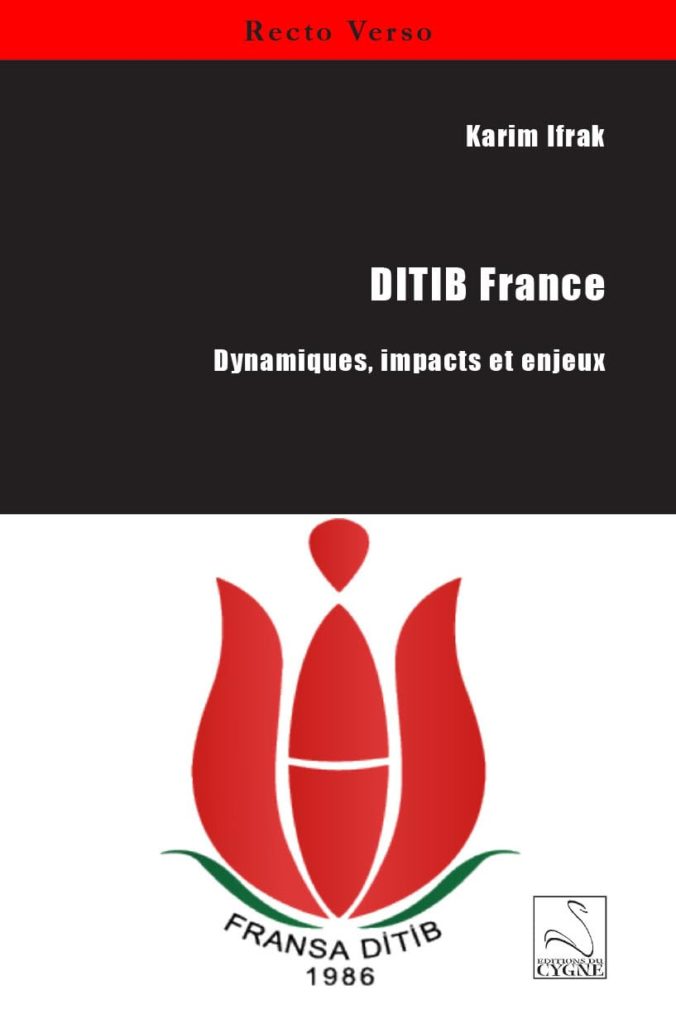
« DITIB France : dynamiques, impacts et enjeux », is an unprecedented study on Islam in France. It will make noise, let us not doubt it, because it upsets the preconceived ideas about Islam in France, and its various forms of organization and supposed influence. The « Diyanet İşleri Türk İslam Birliği », better known by the acronym « DITIB », is a major player in the associative cultural and cultural landscape in France. A multiscalar and multimodal player, this organization has woven a network of 265 legally and structurally autonomous associative structures. Spread over 12 regions, 76 departments and 261 communes, it has been involved for four decades in serving the Turkish and Franco-Turkish community, through the management of places of worship and the organization of multidisciplinary social, educational and cultural activities. Oscillating between constant adaptation and strategic recomposition, it appears as a laboratory of contemporary issues at the crossroads of inclusion, secularism and management of religious pluralism.
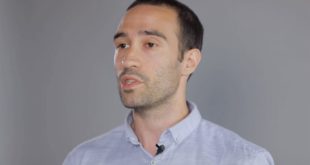
The author of this study is Dr. Karim Ifrak, Doctor of the Practical School of Higher Studies (EPHE), Islamologist, specialist in the history of texts and the life of thought in the Muslim worlds, contemporary and globalized Islam. A member of several learned societies and international research centers, Karim IFRAK is the author of: « Should Islam be reformed? Some keys to reading », ed. Bouraq, Paris, 2017, « Med al-Tahir b. Achour, sa vie, sa pensée », Institut du Monde Arabe, Paris, 2020, « Philosophy of Colors in Islam », Orients Éditions, Paris, 2023.
We asked Karim Ifrak what motivated him to write a book about an organization, so little known to the general public, but whose importance is major in the French Muslim landscape.
DEMYTHIFY FRENCH ISLAM
« This work is primarily a scientific issue. A leading cultural and cultural player in the French community sector, both old in its establishment and firmly rooted in the regions, DITIB remains, against all expectations, an object still little invested by research. This relative deficiency contrasts with its empirical importance. Therefore, this book aims to help fill this gap of intelligibility.
Beyond this first statement of reasons, the DITIB is a particularly fruitful subject of analysis because of its own configuration. Legally inscribed in the French framework, but crossed by extranational logics in a highly regulated institutional environment, it embodies a form of multiscalar actor whose complexity cannot be understood from simplifying categories. As such, it offers a privileged ground for thinking about contemporary recompositions of the religious, as well as the forms of articulation of the local and the extranational.
This book was thus born of a double imperative: to understand and to make understood. Understand how an organization anchored in local spaces can be crossed by multiple dynamics; understand how it articulates territorial inscription and broader horizons; but also restore this complexity without reducing it, by refusing essentialist readings. »
MEF: « Why did you think the study of DITIB was necessary? »
« Studying DITIB means questioning, beyond its own case, the structuring of Islam in France, the modalities of organization of the Muslim cult, as well as the relations between the State, religious institutions and local societies. However, a large part of the work devoted to Islam in France has favored generalist approaches, at the risk of a certain analytical dilution. Treating an object in its entirety often amounts, in fact, to attenuating its specificities.
Conversely, the choice of a circumscribed object makes it possible to restore its empirical thickness and internal coherence. Focusing on DITIB, this book thus proposes to the reader to grasp, in a concrete and precise way, the logics of a major cultural associative actor, far from approximations and hasty generalizations.
From this perspective, this book is intended as a scientific tool. He intends to oppose the simplification of discourses with a rigorous analysis, attentive to nuances and configurations. The study of DITIB is therefore not an end in itself, but a point of entry. Through it, the aim is to question more broadly the contemporary forms of religion, the territorial dynamics and the processes by which Islam is being built in France today. »
This book, exclusively dedicated to DITIB, and therefore unpublished, offers an in-depth analysis of this singular institution, both rooted in the French associative landscape and crossed by local logics. It highlights its modes of organization, its evolutions and the tensions that run through it. In this regard, the reader is invited to better understand the subtle balances that the organization strives to maintain, as well as the growing challenges it faces in a constantly changing environment.
« DITIB France : dynamiques, impacts et enjeux », Karim Ifrak. Éditions du Cygne, Paris, France.
Available in bookstores, on Amazon and on the FNAC website
Jean-Michel Brun